Celebrate Soap Lake's Centennial
  • Home
  • Events
  • Volunteer Opportunities
  • Looking Back
    • Memorable People
    • Memorable Places
    • Remember When
  • Contact Us
  • Share Your Story
  • Home
  • Events
  • Volunteer Opportunities
  • Looking Back
    • Memorable People
    • Memorable Places
    • Remember When
  • Contact Us
  • Share Your Story
Picture

November 20th, 2018

11/20/2018

0 Comments

 
Picture
The Story of Earl McKay, Soap Lake and the Horror of Buerger’s Disease
Picture
Picture
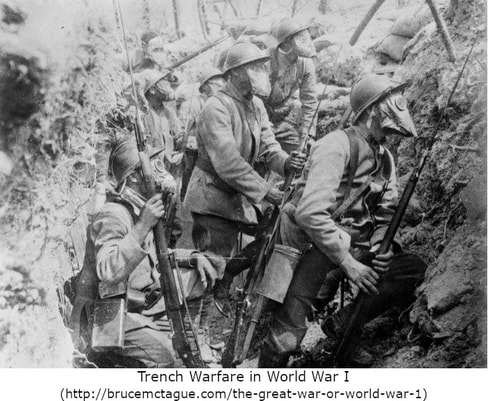
It was called a death by inches. Diminished GIs came home from World War I haunted by the horror of an unimaginable war in the trenches. Then, their extremities began to blacken, become gangrenous, and have to be surgically removed. This malady confused doctors and was often misdiagnosed. Eventually came the dreaded name for it: Buerger’s disease. There was no cure. Before succumbing to the collapse of their lungs, many of these young American men lost both arms and ​legs and lived their remaining life as torsos.

Picture
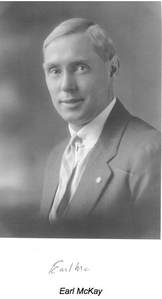
Buerger’s disease victims were desperate for help. The medical community could only offer a series of amputations. Charlatans abounded. It is no wonder that a young army private from Wilbur, WA, looked to the curative properties of the water in nearby Soap Lake. Without surgery, Earl McKay had been given a life prognosis of three months. Earl had grown up hearing about how the Indians had been visiting Soap Lake for centuries to find help for various illnesses.
 
He asked his doctor whether Soap Lake waters might help his condition. “You’re committing suicide” was the doctor’s response. McKay, staring at death, felt he had nothing to lose.
 
​McKay spent his next (and supposedly last) three months bathing in—and drinking the waters of—Soap Lake. On the day he should have died, he looked at his legs to discover they were no longer black. By the end of 1919, Earl’s body was working normally again. In all, he lost only one big toe to amputation.
 
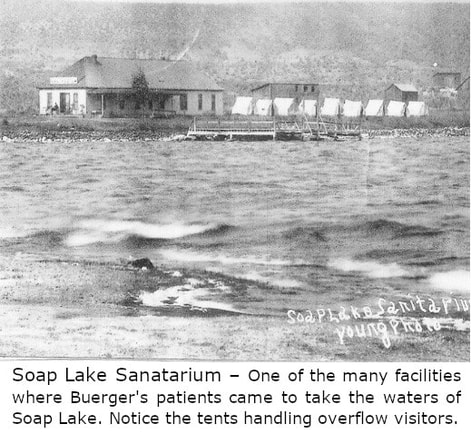
You have to understand that Soap Lake was not an easy cure. Buerger’s disease eats away at flesh and exposes nerve bundles—some as big as a man’s thumb. Submersion in the lake water caused excruciating pain, and the pain continued even when the patient came out of the water. The men (and a few women) who came to Soap Lake seeking help were both desperate and incredibly brave.
 
The second man who came to Soap Lake for “the cure” came in 1930. By chance, a Seattle newspaper reporter heard about McKay’s recovery and wrote up a human interest story. Bill Williamson lay in the Veterans Administration facility in Walla Walla. He’d had Buerger’s since 1921 and had endured 25 surgeries. Both his legs were amputated to the knee and just two fingers on his hands remained whole. Bill’s wife read the Seattle newspaper story and brought her broken husband to Soap Lake. The cure caused horrific pain, but Bill persevered. It took months, but gradually the pain ceased and Bill’s skin grew pink and normal. He was healthy for the first time in ten years.

Picture
McKay and Richardson became evangelical about Soap Lake’s waters. There was no rigorously conducted scientific inquiry to validate their experience. But, Buerger’s victims steadily came to Soap Lake and there was much anecdotal evidence of improvement. No one claimed that Soap Lake waters cured the disease. Both McKay and Richardson soon discovered that their symptoms began to return when they were too long away from the lake. And, because the cure was so excruciatingly painful, many patients did not have the wherewithal to endure until their symptoms were arrested. McKay and Richardson sought research funding from both governmental and private funders. Indeed, Bill Richardson lost another part of his leg (and his ability to wear protheses to walk) when he once stayed too long lobbying in Washington DC.
 
Sufferers - both famous and not - sought help in the waters of Soap Lake. At one time, nearly a third of Soap Lake’s residents were Buerger’s victims. Doctors from all over the state of Washington encouraged patients to bathe in the lake - for help with Buerger’s and other diseases. According to Moses Lake resident, Dick Deane, his aunt, Madeleine Deane, was Eleanor Roosevelt’s dear friend. Aunt Madeleine, who lived near Warm Springs, AK, often visited Deane’s folks in Grant County. She was commissioned by Mrs. Roosevelt to collect bottles of Soap Lake water to be used by President Roosevelt to relieve his polio symptoms. Aunt Madeleine delivered the water to Eleanor in Arkansas.

Picture
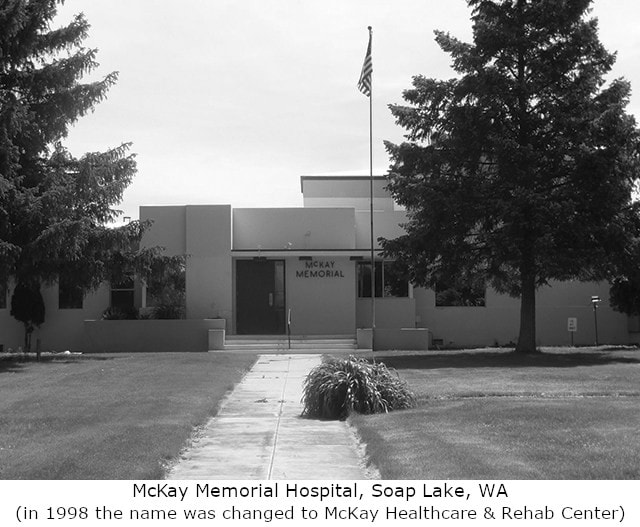
On November 11, 1938, with money appropriated from the United States Congress, McKay Memorial Hospital opened to care (for free) for US military veterans suffering from Buerger's. Non-veterans were treated for $6 a day. Unfortunately, Earl McKay died (at age 44) just two months before the hospital opened.
 
For slightly more than a year after it opened, Buerger’s research was conducted by TJ Tatherrece, MD. His research conclusions? “The results of this investigation indicate that the spa treatment of Buerger’s disease at Soap Lake, WA, is not a specific treatment for the disease. However, the ulcerative and gangrenous complications of this disease can be treated successfully in a large percentage of cases with this type of treatment.”
 
Shortly after the opening of McKay Hospital, Soap Lake fell upon hard times. There was drought. The Great Depression was ongoing. World War II began. The great crowds of people who had been coming to Soap Lake for its medicinal properties diminished. In addition, medical research established a clear connection between Buerger’s Disease and smoking. This explanation comes from the Mayo Clinic:
 
Cigarette smoking greatly increases your risk of Buerger's disease. But Buerger's disease can occur in people who use any form of tobacco, including cigars and chewing tobacco. People who smoke hand-rolled cigarettes using raw tobacco may have the greatest risk of Buerger's disease.It isn't clear how tobacco use increases your risk of Buerger's disease, but virtually everyone diagnosed with Buerger's disease uses tobacco. It's thought that chemicals in tobacco may irritate the lining of your blood vessels, causing them to swell.
 
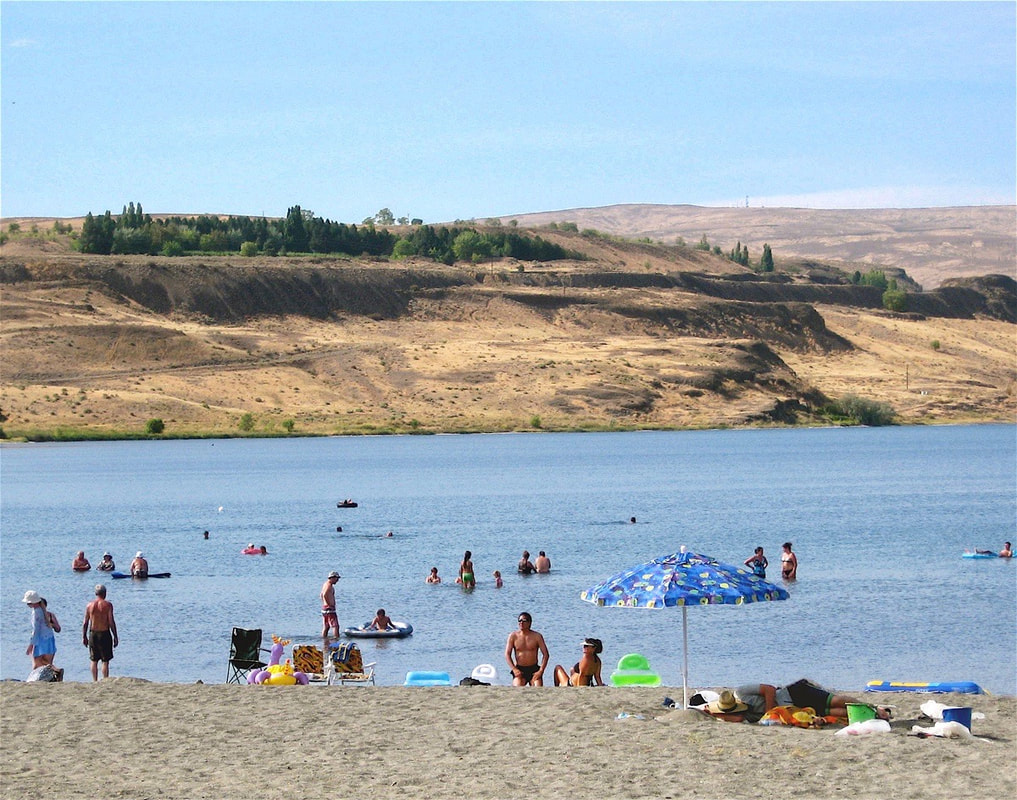
While Buerger’s disease continues to plague areas of the world where citizens heavily consume cigarettes, the incidence and severity of Buerger’s in the United States has decreased significantly. Still, for many other reasons, health seekers still come to Soap Lake - to swim and relax and enjoy its medicinal waters. ​​
Picture
0 Comments


Leave a Reply.

    Archives

    January 2020
    February 2019
    November 2018
    September 2018

    RSS Feed

Powered by Create your own unique website with customizable templates.